Ryan Addresses Media
December 12, 2006 | Men's Basketball
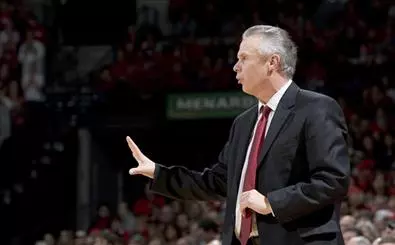
Wisconsin men's basketball coach Bo Ryan addressed the media Monday at the Kohl Center. Ryan fielded questions on Alando Tucker, Trevon Hughes, academics and his upcoming game against UW-Milwaukee, among other topics. A full transcript follows:
QUESTION #1: Have you had any more conversations with Rob this year than last year ' Is it the same thing, the relationship the same, the talks the same '
BO RYAN: Have we talked' Sure. Yeah, when you spend that many years together and . . . what we've been through, you know, we talk. We stay in touch for sure.
REPORTER: Are the conversations a whole lot different just because his team is struggling, or is Rob, I know one of his strength is just staying the course, staying patient and doing . . .
RYAN: Yeah, he'll get ready for the next one. Rob will get ready for this one. That's all I know, because he deals with things the same way I do. So, you know, he's not, he has a young team. You used the term struggling. It's a young team. It's trying to get some things done and mature and blend, but, you know, the rest of us are trying to do the same thing, but only we have older players, guys that have had a few more minutes. So they're just, they're young. But Robbie knows what that's about.
QUESTION #2: Bo, when you win a game like Saturday, hostile environment, tough opponent, what kind of shot in the arm does that get you' Is there something tangible you can see when you come back to practice' Any kind of carryover from that '
RYAN: Well, when I'm done, we have our video session here at 1:30. We 'll see how they react to some of the teaching points I'm going to make between 1:30 and 2:00 before we go out on the floor. So I haven't had them in practice yet. Looking at film yesterday on UWM and, you know, it's on to the next, as we always say.
I had to answer, we just had the Overtime luncheon, and, you know, I knew you guys, because a couple people mentioned this, that you look at me when I go, God, you know, he always says that, next, you just get ready for next, when he doesn't, says he never gets too high, never gets too low. I just got to tell you this. I've been so fortunate in my lifetime, three times, to go through a season undefeated until the last game. In high school, we lost. And in college, we had a chance to do it.
Now if I was the kind of guy that went up and down and up and down, you know, and not had young teams, the high school team that I took over, UWM, taking over fairly young here, especially at Platteville, but, you know, again, I must be pretty fortunate to actually believe what I say, because when you say about Saturday's, I've already forgotten about Saturday's. And, you know, Monday's is still a faint memory because, you know, we get so many calls from the NBA people about the guard from Winthrop. I mean, they were on him. Now they're all over him. And, I mean, that kid is going to play at the next level.
But anyhow, and now it's UWM. So is it a shot in the arm, you asked. I hope I 'm coaching guys that every game, every practice, every time they come out, it isn 't any different as far as their approach to what they've got to do. And I'm hoping they're ready to come to work today because with me it won 't be different, but with young people, I'm not sure, so I don't know how they're going to react.
QUESTION #3: Bo, with, you know, in these last, you know, few weeks, these last few games, are guys making it maybe a lot tougher for you to, you know, hand out playing time in terms of maybe more guys just showing their . . . to get on the floor'
RYAN: Well, I don't know. When you say tough, I think, I don't use the term tough. I think it's a competitive world and I tell the guys a lot about your job is going to be competitive, whatever it is you're going to do after college, and we talk about the challenges of raising families and different things that we get into when we are shooting the breeze, so to speak.
They know, the thing that's really good, is out there on the court, they know the other guys around them are working hard too. And when somebody gets minutes, it wasn 't a shock to any of the guys on our team if one guy gets a bunch of minutes in one game that maybe he didn't get in another, because it's the environment, the element, the type of game, the size, the speed, the this. There's a lot of factors that go into who's on the floor and who isn't.
But is it tough' You just got to go with how you feel. And if somebody isn 't, that's not the end of the world for that player. And to get them to mature and be able to rationalize and realize and have both eyes open and ears and your mind as to what's going on, then you know you've got something pretty good.
QUESTION #4: Bo, was the way that Kamm was utilized offensively on Saturday something that was game-specific, or is that something that's kind of the way it is now '
RYAN: No. Kamm's still, Mike was in a position where we were running a little something with Kamm for that game based on some things that we saw on tape. So whether or not we use that in the next game or two games from now or do something specifically along those lines, but still in the offense, most guys end up in the same positions anyhow, simply with your continuity.
So it's, maybe sometimes it's something for the other team to maybe try to rationalize, why are they doing this. I don't know. That's why I never try to overreact to other people when they change their lineup or do this or do that. Sometimes people do it just to see if they can get into your head. I wasn't trying to get in anybody's head. We were just looking at doing some things, and we knew in that game there were certain things that we were going to need. And as it turns out, the guys did some pretty good things.
QUESTION #5: Greg Stiemsma is averaging about nine minutes a game, but he's tied for third in fouls. And picked up a couple, you know, it looked like Marquette just baited him, knew what he was going to do when he had the ball there. What does he have to do to cut down the fouls'
RYAN: Well, just we always talk about showing our hands to the officials and get your arms. And a lot of times you'll see on tape guys hooking in underneath him and pulling to make it look like he's pushing them. It's one of the oldest tricks in the book. It's almost as old as the technique that my dad used to use when he would drive to the basket.
He would drive to the basket, and of course the shorts were so short then, and he actually did this in the church . . . which I didn't think was fair, because it was not by the rules. And he would drive to the basket and shoot the ball up and smack his left leg, and he'd draw fouls. That's the oldest one.
Second oldest is when you hook somebody when they're rebounding. You get up under them and you pull them, and you make, as you go down, it looks like the guy's throwing you to the ground. And it's like the, that's why there 's certain officials I know are good. They never fall for it. So he's had a few of those, so there's some officials that didn't quite see it correctly. But the others on that, you know, if he just moves, sometimes if guys go down, I don't know, maybe most officials are short and they favor the shorter player. I don't know.
QUESTION #6: . . .
RYAN: Well, I look at tape, and I definitely did not see anything. Now the two pops that Michael Flowers had, those were definitely connections, and they had great replays of those. But nothing intentional either side. It was just sometimes you're in the wrong place. Take a look at any old basketball player and look at all the eye scars and their teeth, before mouth guards were used and everything else. Basketball, it's just a tough sport for that, because there's no protection. I mean, mouth guards now for their teeth, but around the face there isn't.
QUESTION #7: In past years, Alando seemed content to finish drives with lay-ups. And this year, he seems like he's going to dunk the ball a lot more often. Is this a product of advice from you and the coaching staff, his own initiative, or something else '
RYAN: Well, sometimes it depends on if there's a help player there or his takeoff, whether or not, how he read the defense. You know, there's time where he finished off the glass. He doesn't try to dunk every time. A lot of times if you try to dunk, it takes a little longer to gather yourself and to get the ball in position, and the help defense can get over there and get a piece of it. But we do a little drill where we, okay, swing and drive to the hole, you know, rip through with the ball, or just catch and go.
If you catch and go and quickly lay it off the backboard as opposed to going and trying to dunk, it's a second quicker. So sometimes he'll dunk if he feels there 's a reason, maybe some contact or the position that he's in or his takeoff ability, how he was planted, and other times where you just want to quickly get it to the backboard. You play the game' Can you jump' Can't help you out there then.
QUESTION #8: Bo, when you took a closer look at the tape of the game, what stood out to you about the way Trevon played'
RYAN: Taking the charges. He actually flicked a couple passes away. On the one that he got the steal, he didn't get to the basket because, again, he thought about dunking the ball. And the infamous, a player of ours at Platteville steals a ball with three seconds to go at half court. He lays the ball in very quickly, because if he tried to dunk the ball, the game would have gone into overtime.
The score was tied. He gets a steal. And you could, on the replay we're looking at it, Ernie Peavey, quickly gets the ball out in front of him, lays it in the basket, because if he'd had tried to dunk, the buzzer would have gone off. So that's what happened on the one. Trevon actually wanted to flush one.
You know, and the charge that he could have made a better decision on, he thought he was going to slide by Dominic James on that one and he didn't quite make it happen. But he brought some energy. He was strong with the ball. He got in, made some good decisions with his passes. And he just has a good feel for those type of situations.
QUESTION #9: Bo, is Alando quicker to his right or his left, because he made moves on Saturday . . .
RYAN: Both ways. Yeah, I mean, that just comes from drills and shot fake and go. When we do our full-court shooting, sometimes we'll work on attack dribbles, we 'll work on pull-ups, we'll work on step-backs. It depends on the day. But you know, some guys, it's referred to as they smell the rim, you know, and he, when he smells it, he usually gets there.
QUESTION #10: Bo, earlier in this press conference, you talked about Rob's team, and I think you said they were young, younger, inexperienced, one of those two, maybe both. But just can you talk about maybe the importance when you're teaching the swing of having those older players in the program who have, you know, gone through it and their role in teaching that to the younger . . .
RYAN: He's done a very good job at teaching it. I see wide-open shots they are getting. And you'd have to ask him, but, you know, from the films that I looked at, they're getting shots. That's the only thing you referred to was the offense. I mean, I think they're picking it up, because they're getting some pretty good looks. And a couple of those guys really know how to attack off it. They 're picking some things up. They already have. And it's a matter of being consistent shooting-wise, and they're certainly working at it. Good spacing.
QUESTION #11: Coach, after having a day to look at what Alando did this past Saturday, I mean, is this something that you just come to expect from him when it comes to taking over basketball games like he did'
RYAN: Well, you know, Alando has to feel, in his position, that he's got to be somebody who can make things happen. But having to take over games, we've been, we 've won games and done pretty well when he was a contributor as well as the main donor to what was happening in the game.
So he's been a part of everything, which on a team you have that with all the parts, but he's, needless to say, the part of the whole that's been the most consistent. So he's worked hard to put himself into that position, and we certainly aren't going to discourage him from doing a lot of positive things. So, you know, and he's got the maturity to handle it. Some guys don't.
QUESTION #12: Do you or the coaching staff do anything to help the guys deal with the extra stress of finals'
RYAN: Yeah, well, we, tell you what, having this academic center right here has already done some things that have helped us coming into the tough part of winding down a semester and then going into finals. Anytime you can save 20 minutes to an hour every day on moving from one place to another or getting everything, everything being right here has helped, the fact that our guys now are a little bit older, so you get a little wiser on your time, on what to do, what not to do.
Again, you've got the youngest team in the history of the school, and it 's about the 100th time that I've referred to this, because it wasn 't referred to much last year when a couple guys took the bumps. If you learn something, put the learning to use. So we'll see. Put it to use. So when you say stress, we don't, I mean, if they have a tutorial session, if there's a study group, our guys have left practice. We've been down to 12 guys a couple practices at the end because of what time study groups started.
But the early practice has been the better of the two to help the student-athletes. You know, again, we practice and play during the week, but we practice at different times different semesters. Usually a lot of the study groups, that later practice has been, there 's been conflicts. But early practices, it tends to be more user-friendly for the players, and that's what we're in right now, the early ones.
But I also went to Lisa last spring and we worked out a couple things on stopping a little earlier, using the two facilities a little better in our juggling. But again, that 's as a function of trying to improve, improve with your play, improve with your studies, improve with your demeanor, improve with your personality, older, wiser. So the stress, the more years you've been in and competing as an athlete, you tend to handle it a little better. So the best thing was to get them older, let the calendar, tear the pages off the calendar.
QUESTION #13: When Alando is making some of those shots where he's driving in the lane, twisting through bodies and getting contact, are you holding your breath when he makes some of those moves, or it seems like nobody shoots better when he gets contact that he does, almost like he's an aerobics instructor whirling and twirling in there and making them, or have you just seen it so much that you come to know that those are the things he does on a daily basis and can you teach that to anybody'
RYAN: See, it's too bad we don't have, all those Wilkes tapes were destroyed in the flood in '72. What's the big deal about whirling around and 360's' You didn't do it' It's not that big a deal. Alando has the ability, because when you have the leg strength and the coordination to be able to leave the floor and get some contact, play off of that contact and then make a play.
And in basketball, a lot of the better players, that's what they have, the ability to get into a situation, the defense is going to commit to something. The better players then are one step ahead, like the good chess players. They know what's coming next after the defense has made their commitment. The offense does something. The defense thinks they've already committed. The defense commits to what they're going to do. The better offensive players have one more in them. They've got another move in them. And that's Alando.
REPORTER: . . .
RYAN: That doesn't surprise me, no. I've been fortunate enough to see other guys that have done it and, you know, it's, maybe not here, but been around some other guys. So when you have somebody that can do those things, you allow them a little more freedom.
REPORTER: . . .
RYAN: Well, on tape you can show them, okay, when you make this move, always remember, the help is going to be in this position, this is what you have to. What you can do is take them to the chess table and show them a move or two down from videotape. This is where the help's coming from on this drive.
You drive baseline, this is what's going to happen. This team sinks this way. This team packs that way. This team pinches from the ball side, not from the opposite side, whatever. You can show a player a little bit better maybe what they're not seeing but what's coming, and then they can prepare for it.