July 23, 2026 | Football, General News, Wrestling, Andy Baggot
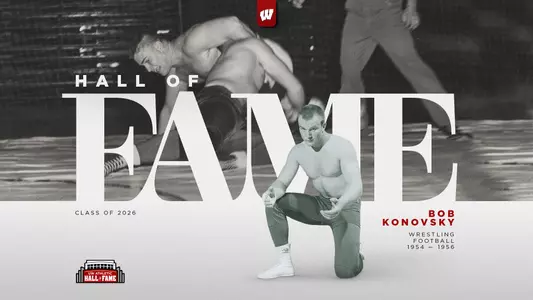
Bob Konovsky managed to cram a whole lot of living into a relatively short life.
He had his first heart attack when he was 42. Five years later, he died from a combination of diabetes and heart disease in March of 1982.
"Great father, good husband, exceptional athlete," is how his oldest son and namesake, Bob Jr., described him.
"He was a big family guy with a big, big personality. He was a funny guy with a million jokes. He was always able to make fun of himself."
Bob Sr. had his initial heart attack while watching his youngest child, Billy, wrestle for Michigan.
"He got five more years, but his health wasn't that good," Bob Jr. said of his father.
Still, the elder Konovsky led a diverse, accomplished existence, especially where sports, academics and entertainment were concerned. It's why he's being inducted into the Wisconsin Athletic Hall of Fame as part of the Class of 2026.

Konovsky played the saxophone and the accordion at his high school in Cicero, Ill., earning citations for his skills.
He won the Illinois State heavyweight wrestling title as a 6-foot-2, 235-pound junior. He wound up choosing to attend Wisconsin to play football in part because he felt Michigan broke its stated plan to recruit only one offensive end.
Konovsky played football – first as a pass-catching end and later an offensive tackle – at UW where he earned the Big Ten Conference Medal of Honor in 1956 as "the student of the graduating class who has attained the greatest proficiency in scholarship and athletics."
Duane Kleven was an assistant wrestling coach for the Badgers at the time. He remembered seeing Konovsky on the field inside Camp Randall Stadium.
"He was a big guy with a lot of talent and very mobile," Kleven said. "He wore number 70. Played tackle."
Konovsky also wrestled and served as captain for the Badgers. He won three straight Big Ten heavyweight titles and finished second, third and second again in the NCAA tournament on the way to a 45-4-1 career record.
According to Bob Jr., his father was enamored by George Martin, the UW wrestling coach. "He was his favorite coach because he spoke of him the most," the son said.
Konovsky was subsequently chosen in the seventh round of the 1956 NFL draft by the Chicago Cardinals. Bob Jr., now 70, said he recalled watching his dad practice with the Cards at the team's headquarters in Indiana.
The elder Konovsky wound up playing for the legendary George Halas, who coached the Bears, in 1960. Konovsky had hoped to play that season with the Philadelphia Eagles, but Halas talked him out of it. That apparently became a sore spot with Konovsky when the Eagles won the NFL title, knocking off the Vince Lombardi-led Green Bay Packers, 17-13. A year later, Konovsky opted to play for Denver in the old American Football League before retiring.
"The $5,000 was too good to turn down," his son said of his time with the Broncos.

Bob Sr. had a brief brush with Hollywood. He joined a group of Bears players in appearing in a movie, released in 1965, called "Mickey One" and starred Warren Beatty. In one scene, Konovsky, playing the role of a bouncer, tries to choke Beatty.
"If you ever want to fall asleep sometime," his oldest son joked, "rent that."
The elder Konovsky sold insurance and became a professional wrestler to make some extra money on the side. He had two nicknames: "Killer" Konovsky and the "Masked Man." He came to despise wearing the mask.
"It drove him nuts," said his son.
Bob Jr. said he accompanied his grandfather – who happened to be the chief of police in Cicero – to see his father wrestle one time.
"They sat me down beforehand and explained how all this worked," Bob Jr. recalled, alluding to the theatrical nature of the activity. "My dad really wasn't being choked. He really wasn't kicking the guy in the head, either. So that was kind of important to get through a 5-year-old's head.
"Back then it wasn't like WWE. There were maybe 200 people in a small arena. (Former wrestler and promoter) Vern Gagne ran it. My dad knew him from his wrestling days."
Alex Karras, a star lineman at Iowa and in the NFL with the Detroit Lions, who dabbled in wrestling and acting, was a good friend of Konovsky's who talked him into wrestling as a pro. Together they barnstormed throughout the upper Midwest and New Mexico staging bouts versus the likes of Bozo Brown and Angelo Poffo.
"He was probably a better wrestler than a football player," Bob Jr. said of his dad, who was inducted into the National Wrestling Hall of Fame and Museum in 1986, the same time he was added to the Illinois Wrestling Hall of Fame.
"My dad always loved the University of Wisconsin. We would go up there from time to time when we were kids."
Two: Bob Sr. loved Madison so much that he wanted to retire there, but he died before he could make that happen.
Three: The elder Konovsky once filed a lawsuit in Dane County Circuit Court for release from a 10-year pro wrestling contract with two Madison men. Konovsky alleged that terms of his deal were broken through failure to obtain appearances for him since May of 1956 and also claimed that two men failed to do any publicity and promotional work on his behalf.
At Camp Randall Stadium on Thursday, May 28, University of Wisconsin Interim Director of Athletics Marcus Sedberry revealed that Bob Konovsky will be inducted into the UW Athletic Hall of Fame as part of the Class of 2026.
The class of legendary Badgers will be inducted into the Hall of Fame later this fall during a weekend of celebration on September 18 and 19. The inductees will be honored inside Camp Randall Stadium during Wisconsin Football's meeting with Eastern Michigan (Sept. 19 – 11:30 a.m. CT).
He had his first heart attack when he was 42. Five years later, he died from a combination of diabetes and heart disease in March of 1982.
"Great father, good husband, exceptional athlete," is how his oldest son and namesake, Bob Jr., described him.
"He was a big family guy with a big, big personality. He was a funny guy with a million jokes. He was always able to make fun of himself."
Bob Sr. had his initial heart attack while watching his youngest child, Billy, wrestle for Michigan.
"He got five more years, but his health wasn't that good," Bob Jr. said of his father.
Still, the elder Konovsky led a diverse, accomplished existence, especially where sports, academics and entertainment were concerned. It's why he's being inducted into the Wisconsin Athletic Hall of Fame as part of the Class of 2026.
Konovsky played the saxophone and the accordion at his high school in Cicero, Ill., earning citations for his skills.
He won the Illinois State heavyweight wrestling title as a 6-foot-2, 235-pound junior. He wound up choosing to attend Wisconsin to play football in part because he felt Michigan broke its stated plan to recruit only one offensive end.
Konovsky played football – first as a pass-catching end and later an offensive tackle – at UW where he earned the Big Ten Conference Medal of Honor in 1956 as "the student of the graduating class who has attained the greatest proficiency in scholarship and athletics."
Duane Kleven was an assistant wrestling coach for the Badgers at the time. He remembered seeing Konovsky on the field inside Camp Randall Stadium.
"He was a big guy with a lot of talent and very mobile," Kleven said. "He wore number 70. Played tackle."
Konovsky also wrestled and served as captain for the Badgers. He won three straight Big Ten heavyweight titles and finished second, third and second again in the NCAA tournament on the way to a 45-4-1 career record.
According to Bob Jr., his father was enamored by George Martin, the UW wrestling coach. "He was his favorite coach because he spoke of him the most," the son said.
Konovsky was subsequently chosen in the seventh round of the 1956 NFL draft by the Chicago Cardinals. Bob Jr., now 70, said he recalled watching his dad practice with the Cards at the team's headquarters in Indiana.
The elder Konovsky wound up playing for the legendary George Halas, who coached the Bears, in 1960. Konovsky had hoped to play that season with the Philadelphia Eagles, but Halas talked him out of it. That apparently became a sore spot with Konovsky when the Eagles won the NFL title, knocking off the Vince Lombardi-led Green Bay Packers, 17-13. A year later, Konovsky opted to play for Denver in the old American Football League before retiring.
"The $5,000 was too good to turn down," his son said of his time with the Broncos.
Bob Sr. had a brief brush with Hollywood. He joined a group of Bears players in appearing in a movie, released in 1965, called "Mickey One" and starred Warren Beatty. In one scene, Konovsky, playing the role of a bouncer, tries to choke Beatty.
"If you ever want to fall asleep sometime," his oldest son joked, "rent that."
The elder Konovsky sold insurance and became a professional wrestler to make some extra money on the side. He had two nicknames: "Killer" Konovsky and the "Masked Man." He came to despise wearing the mask.
"It drove him nuts," said his son.
Bob Jr. said he accompanied his grandfather – who happened to be the chief of police in Cicero – to see his father wrestle one time.
"They sat me down beforehand and explained how all this worked," Bob Jr. recalled, alluding to the theatrical nature of the activity. "My dad really wasn't being choked. He really wasn't kicking the guy in the head, either. So that was kind of important to get through a 5-year-old's head.
"Back then it wasn't like WWE. There were maybe 200 people in a small arena. (Former wrestler and promoter) Vern Gagne ran it. My dad knew him from his wrestling days."
Alex Karras, a star lineman at Iowa and in the NFL with the Detroit Lions, who dabbled in wrestling and acting, was a good friend of Konovsky's who talked him into wrestling as a pro. Together they barnstormed throughout the upper Midwest and New Mexico staging bouts versus the likes of Bozo Brown and Angelo Poffo.
"He was probably a better wrestler than a football player," Bob Jr. said of his dad, who was inducted into the National Wrestling Hall of Fame and Museum in 1986, the same time he was added to the Illinois Wrestling Hall of Fame.
BEST OF THREE
One: What would the elder Bob Konovsky say about going into the UW Athletic Hall of Fame? "Wisconsin was a big deal for him," his oldest son said. "He really liked Wisconsin. He really enjoyed his time there. It would mean a lot to him and it means a lot to us.""My dad always loved the University of Wisconsin. We would go up there from time to time when we were kids."
Two: Bob Sr. loved Madison so much that he wanted to retire there, but he died before he could make that happen.
Three: The elder Konovsky once filed a lawsuit in Dane County Circuit Court for release from a 10-year pro wrestling contract with two Madison men. Konovsky alleged that terms of his deal were broken through failure to obtain appearances for him since May of 1956 and also claimed that two men failed to do any publicity and promotional work on his behalf.
At Camp Randall Stadium on Thursday, May 28, University of Wisconsin Interim Director of Athletics Marcus Sedberry revealed that Bob Konovsky will be inducted into the UW Athletic Hall of Fame as part of the Class of 2026.
The class of legendary Badgers will be inducted into the Hall of Fame later this fall during a weekend of celebration on September 18 and 19. The inductees will be honored inside Camp Randall Stadium during Wisconsin Football's meeting with Eastern Michigan (Sept. 19 – 11:30 a.m. CT).

Wednesday, October 21
Tuesday, October 20
Monday, October 19
Sunday, October 18