In Allie's wake: Getting a 'Head' start to the fall
September 26, 2018 | Women's Rowing
Badgers put their summer work into action as the year begins
Senior and Chanhassen, Minnesota, native Allie Lohrenz is giving regular updates this year from Porter Boathouse and around the country as the women's rowing team travels through the 2018-19 season. A third generation Wisconsin student-athlete (grandfather played football and mom was a rower), Lohrenz played lacrosse and competed in motocross before walking onto the Badger rowing program her freshman year.
MADISON, Wis. -- School is in full swing, and after a few weeks of getting back into the routine of things, it is officially time for Wisconsin rowing to hit the race course.
Our team has wasted no time in achieving the delicate balance between school, training and a social life, so what better way to challenge ourselves than throwing a little racing into the mix? The collegiate racing season has begun, and this fall we are looking forward to attacking the course, head race style.
When talking about the difference between head races and sprint-style regattas, I like to use the analogy of running. Head races take place in the fall, and similar to cross country races, are much longer and take place on winding, crowded and sometimes unpredictable race courses. The spring is traditionally reserved for sprints, 2,000 meters of drag-race style, flat out, hang-and-bang racing. Much like track sprinters, boats are assigned lanes and rocket off the line at the same time. With the most obvious difference being the distance—head races 5,000 meters and sprint races 2,000 meters, the courses are also different. Head races are generally raced on rivers, where there is room for twists, turns and tough racing with or against the current. Sprints are a straight, buoyed and lane driven course.
Fall racing holds a special place in the hearts of many athletes at the University of Wisconsin. It serves as a showcase for the hours of training and hard work that teams put in over the summer, offering a revitalizing change in venue from the typical straight edge 2,000-meter course. For many crews, including the Badgers, the 5,000 meter race course is the highlight of the fall semester.
As we wrap up the last few days of September and make our descent into the mornings of October, the women of Porter Boathouse greet head racing season with open arms.
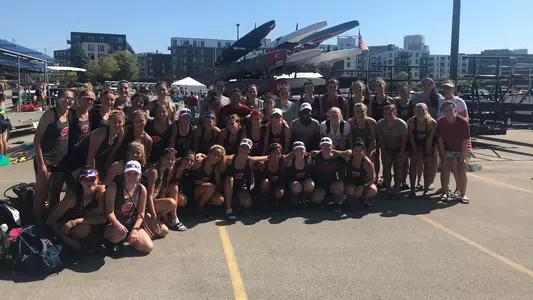
Since my time as a freshman, the team has kicked off fall racing with a trip east to the Milwaukee River. The Milwaukee River Challenge has always been one of my favorite races. It's an amazing mixture of nerves and excitement as our team is granted the opportunity to race against other crews, each other and the clock for the first time as a unit after a few months away. September in Milwaukee is hot and humid, adding an extra element of difficulty to the strategy and execution of racing. With that being said, Saturday in Milwaukee was nothing short of a show as the Badgers brought their best, fighting tooth and nail against the current for each second down the river. Each boat tapped into its gritty and competitive racing reserves, earning the top three podium spots in both the Women's Open 4+ and the Women's Open 8+.
While the victory was sweet, one of the best aspects of head racing is the atmosphere along the racecourse. Fans in Milwaukee can be heard cheering and shouting words of encouragement from the bridges, the apartment buildings, the walkways and the breweries, making the racing experience that much more competitive and exhilarating. While the racing is hard and the days are hot, there is nothing more gratifying than the opportunity to display our talents and hard earned skills, especially when it is in front of the city of Milwaukee and our loyal Badger friends, families and fans.


Players Mentioned